
Open Banking discussions often focus on regulation, APIs and innovative fintech use cases. But beneath those visible layers sits a piece of infrastructure that few people talk about, yet is essential to making the ecosystem work.
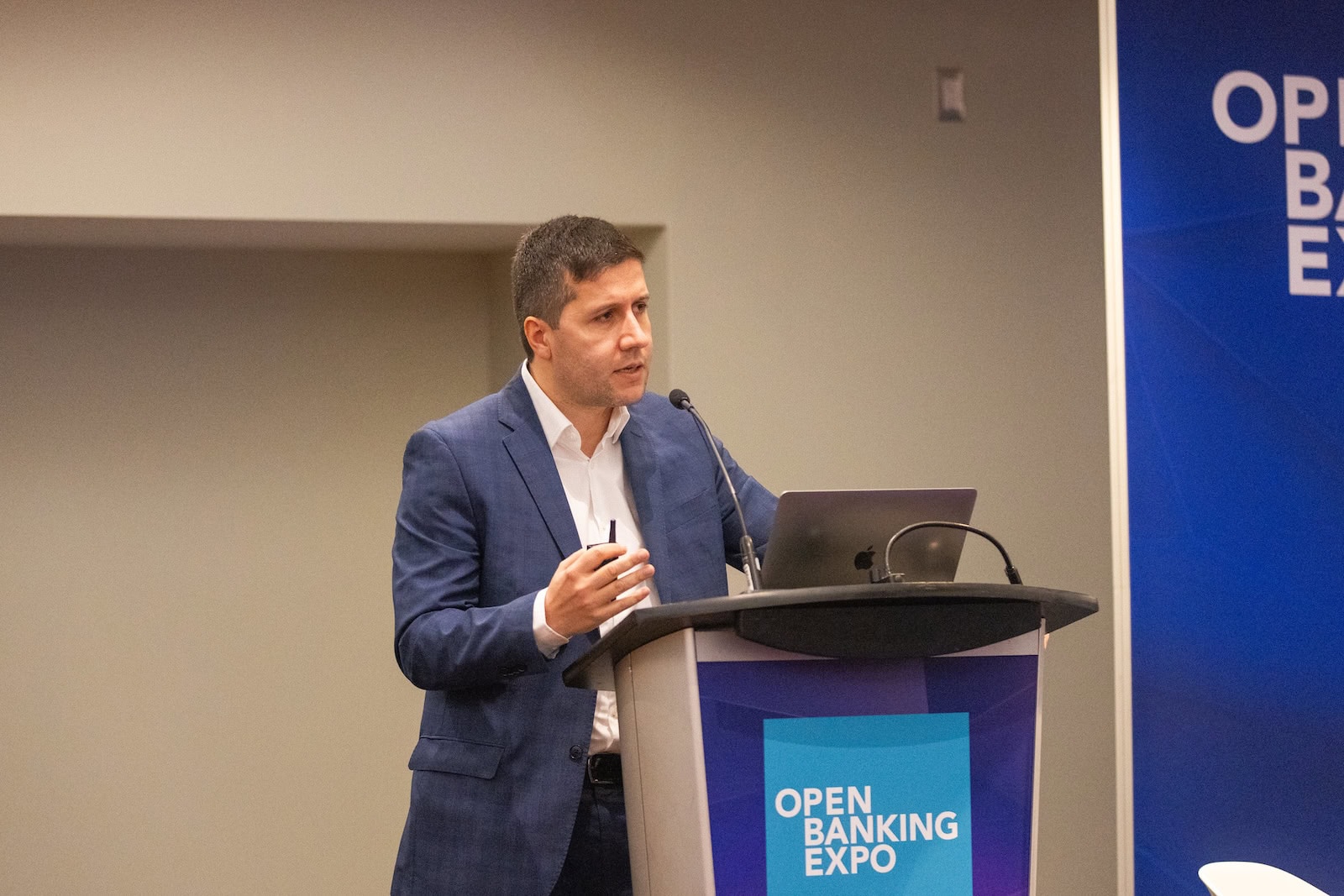
At Open Banking Expo Canada 2026, Paulo Barbosa, chief operating officer at Banfico, argued that the success of Open Finance ultimately depends on a much less visible component: directory services.
Without them, scaling trust across the ecosystem becomes extremely difficult.
Trust is the real infrastructure of finance
Barbosa opened with a reminder that financial systems ultimately run on trust.
Reflecting on the Greek financial crisis, he recalled how confidence in the financial system evaporated almost overnight, leading to bank withdrawal limits and queues at ATMs.
“When trust went, everything went down with it,” he said.
That lesson is particularly relevant as Open Banking introduces hundreds, and potentially thousands, of new participants into financial ecosystems.
The question is no longer whether new actors will enter the system, but how to ensure they can be trusted, according to Barbosa.
“It is giving new actors the opportunity to deliver services that were once the exclusive domain of banks. So, the question is no longer whether this will happen. This is already happening.
“The question is, how do we make it happen safely? How do we let hundreds of new actors or fintechs into the system without losing the one thing the Greek crisis showed us that you cannot afford to lose – trust?” he asked.
The challenge of scale
In a simple Open Banking interaction, a consumer shares their financial data with a fintech, which connects to a bank’s APIs.
But once that model scales to hundreds of fintechs and thousands of connections, the complexity multiplies quickly, rqaising questions such as
- Is the fintech who they claim to be?
- Are they licensed?
- Do they have permission to do this scope of data?
The industry’s answer to these questions is a trust framework, which combines governance rules, technical standards and security infrastructure.
The role of directory services
Directory services sit at the centre of this framework.
They provide a single trusted source of information about ecosystem participants, including regulated entities, API endpoints and digital certificates used for secure communication.
Barbosa explained: “A trust framework is a set of rules, standards, and infrastructure that allows the participants that are part of the ecosystem to establish trust automatically, without necessarily knowing each other, and without having any previous contractual relationship.”
In Europe, where Banfico has operated directory infrastructure since 2019, these services automate key processes, such as verifying licensed participants, managing cryptographic certificates and enabling automated onboarding of fintechs. Without this layer, banks would face significant operational friction.
Manual onboarding, bilateral negotiations and repeated verification checks would slow down innovation and create barriers for new entrants.
Building the foundations for Open Finance
As Open Banking expands globally, directory services are becoming a core part of the ecosystem’s infrastructure.
More than 80 countries are now implementing Open Banking frameworks, with increasing interest in connecting these systems across borders.
For Barbosa, the message is simple: “You can have brilliant APIs, clear regulations, ambitious fintechs with very fancy use cases, but without a directory it’s hard to get trust. And without trust, it’s really hard to implement a good Open Finance framework.”
Further reading: Consumer-Driven Banking: Scaling trust and confidence for Canada’s Open Banking future