

Canada’s Open Banking conversation has entered a new phase. After years of consultation and policy design, the focus is shifting to something more practical – delivery.
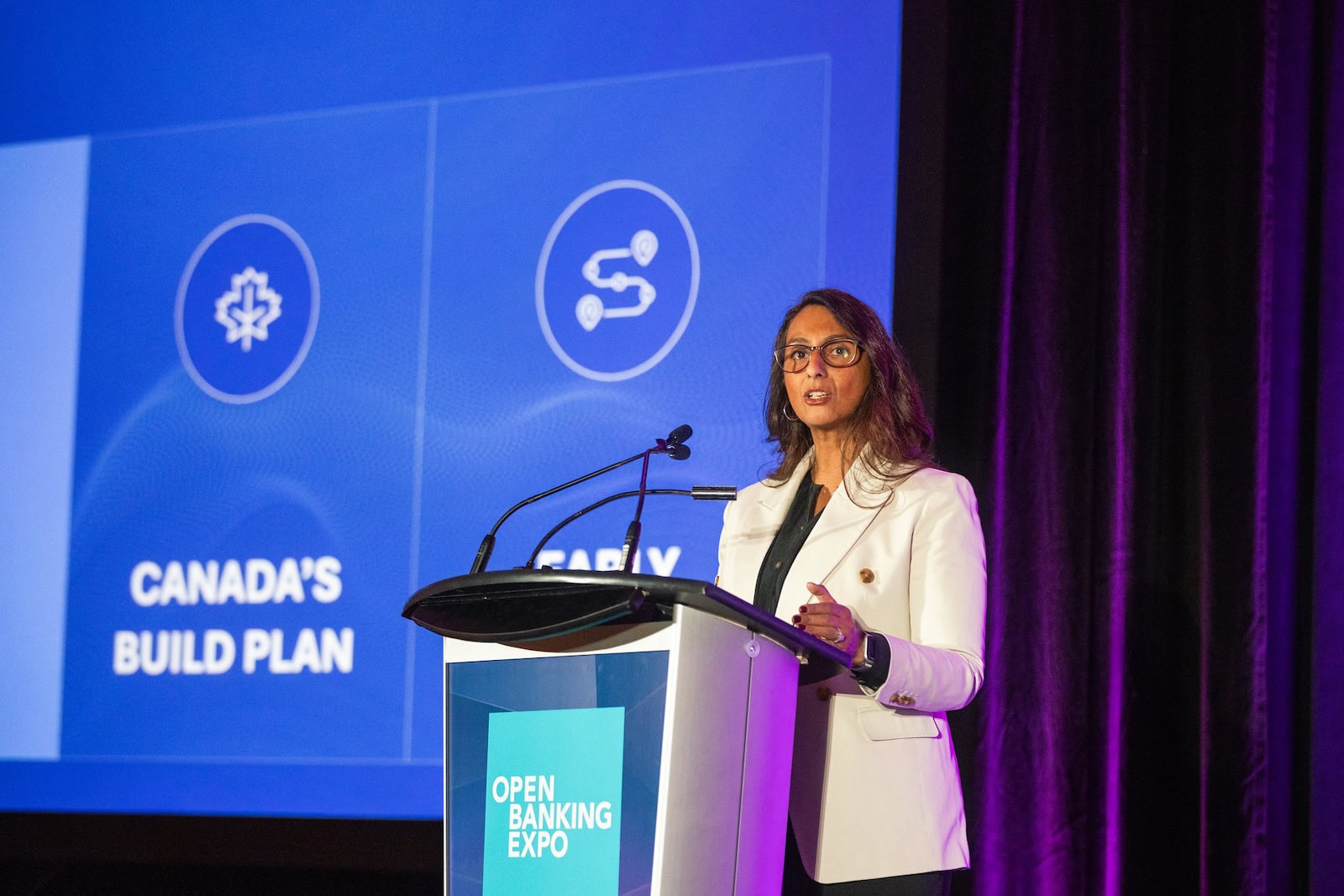
Delivering the Opening Keynote at Open Banking Expo Canada, Saba Shariff, senior vice president and chief strategy, product and innovation officer at Symcor, described the current moment as Canada’s “build year”, when the industry must move from designing the framework to delivering real experiences for consumers and businesses.
“A year ago, when we talked about Open Banking in Canada, every conversation came with a caveat,” she told attendees. “If the scope is defined, if the timelines hold, if the market is ready. And yet today, those ‘ifs’ feel smaller.”
With Budget 2025 expanding the scope of consumer-driven banking and the Bank of Canada taking on regulatory oversight for financial data sharing, the conversation has shifted from whether Open Banking will happen in Canada, to how it will be implemented.
But Shariff warned that a mandate alone does not create momentum.
“When you compare markets that moved fast with those that stalled, one truth is clear: People don’t adopt Open Banking,” she said. “They adopt better experiences.”
Looking at global markets such as the UK, Australia and Brazil, Shariff highlighted a common pattern. Open Banking frameworks may launch through regulation, but adoption only accelerates when consumers see clear value in their everyday financial lives.
In Brazil, for example, rapid adoption followed the introduction of innovative use cases built around instant payments. In Australia, momentum only began to grow once digital lenders and fintechs started delivering more compelling customer experiences.
Shariff told attendees that, for Canada, the lesson is clear: successful Open Banking ecosystems combine trust, value and incentives.
“We can certainly learn from global patterns, but we can’t simply import someone else’s playbook,” she explained.
“Canada needs a model designed for Canada and for Canadians. One that reflects our infrastructure realities, our regulatory environment, and the experiences that Canadians actually want.”
Shariff argued that Canada should prioritise delivering a small number of high-impact use cases early in the rollout, particularly for small businesses and payments.
These could include adaptive lending based on real-time cash flow data, payee verification to help prevent fraud, and automated real-time accounting for small businesses.
Each of these journeys, she said, demonstrates how Open Banking can solve real-world problems rather than simply exposing financial data.
“Momentum comes from experiences people can feel,” she said. “Early journeys must be frequent, visibly valuable, and realistic to build.”
For Shariff, the opportunity now facing Canada is not simply to implement another regulatory framework, but to build financial infrastructure that supports innovation, productivity and trust in a more digital economy.
“The mandate gave us permission and now it’s time for us, as Canadians, to give them momentum,” she concluded.
Further reading: Mobilizing Open Banking – Industry leaders debate whether Canada is finally building at scale