


The emergence of AI-powered payments is creating new opportunities for consumers and businesses, but industry leaders say clearer safeguards and responsibilities will be essential to building trust in the next generation of payment services.

Simon Lyons, Chief Strategy Officer, obconnect
Speaking at Open Banking Expo UK & Europe 2026 in a session moderated by Simon Lyons, chief strategy officer, obconnect, payments and fraud specialists explored how consumer protection could evolve as artificial intelligence increasingly supports financial decisions and transactions.
During the panel discussion Who pays for fraud? Liability, responsibility and the fight for control, speakers highlighted the importance of distinguishing between fraudulent transactions, payment errors and situations where an AI agent acts on a customer’s instructions but produces an unexpected outcome.
The discussion also examined how banks, technology platforms and telecommunications providers could collaborate more closely to prevent fraud before it reaches the payment stage.
Defining responsibility in agentic payments
Matthew Hunt raised the question of how existing consumer protection frameworks should apply when AI agents begin initiating payments on behalf of customers.
As financial services move towards more automated transactions, he suggested that the industry would need to distinguish between different types of problems rather than treating every unsuccessful outcome as a payment failure.

Matthew Hunt, Advisory Board Member, Emtech
Hunt questioned whether existing fraud reimbursement mechanisms should automatically apply when an AI agent makes a purchase that a customer subsequently regrets.
“I don’t think it is automatically the case that consumer protection and fraud reimbursement style mechanisms should be used every time an agentic payment goes wrong,” he said.
He argued that establishing clear boundaries between fraud, consumer disputes and purchasing decisions would help the industry develop appropriate protections as new payment technologies emerge.
Commercial VRP could support greater customer control
Rob Bratby highlighted the potential for payment technologies to introduce additional safeguards.
He suggested that commercial variable recurring payments (cVRP), which enable payments within customer-authorised parameters, could provide useful controls for periodic transactions.
As agentic payments develop, similar approaches could help establish boundaries around how automated transactions are initiated and executed.
Bratby acknowledged that such controls would not eliminate fraud, but identified them as part of a broader set of measures that could support safer payment experiences.

Rob Bratby, General Counsel, UK Payments Initiative
The discussion reinforced the importance of designing protections into new payment services from the outset, rather than relying exclusively on reimbursement after something goes wrong.
Exploring a more collaborative approach to reimbursement
Hunt also suggested that the industry could explore alternative funding arrangements for fraud reimbursement.
Drawing on established card payment models, he pointed to the potential for a shared fund supported by transaction-related charges.
He argued that such an approach could help align commercial incentives with consumer protection while supporting a sustainable payments ecosystem.
Hunt also emphasised the importance of involving online platforms and telecommunications companies in fraud prevention, recognising that fraudulent activity can begin well before a payment is made.
Building on the UK’s consumer protection framework
Ruth Ray highlighted the importance of the UK’s existing authorised push payment (APP) fraud reimbursement arrangements, including the sharing of reimbursement liability between sending and receiving payment service providers.
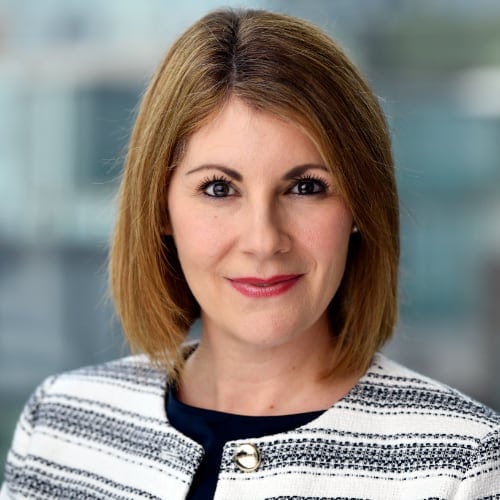
Ruth Ray, Managing Director of Economic Crime, UK Finance
She supported consistent consumer outcomes and the use of behavioural analytics to identify potentially vulnerable customers.
However, Ray argued that the industry must also continue developing preventative measures to stop money reaching criminal networks in the first place.
She highlighted ongoing collaboration involving government, UK Finance and other stakeholders to explore how incentives could encourage greater participation from the technology sector.
The discussion also considered lessons from other jurisdictions, while recognising that approaches would need to reflect the UK’s regulatory environment.
Preventing fraud earlier in the customer journey
Jack Williams pointed to the Online Safety Act as an important development in establishing responsibilities for online platforms.
He noted that the legislation introduces obligations relating to fraudulent content, but distinguished these preventative requirements from mechanisms that reimburse victims.
The panel discussed opportunities for greater cooperation between financial institutions, online platforms, telecommunications providers and law enforcement.

Jack Williams, Financial Crime Compliance Lead, Teya
Speakers agreed that consumer education remains valuable, but that increasingly sophisticated scams, including AI-enabled impersonation, require a wider range of preventative measures.
Ray highlighted the Take Five to Stop Fraud campaign as an example of efforts to help consumers recognise and respond to suspicious activity.
She also stressed that the growing sophistication of fraud means consumers cannot be expected to identify every threat themselves.
Building trust in the next generation of payments
As Open Banking and AI enable more automated financial services, the discussion highlighted an opportunity to develop consumer protection alongside innovation.
Clearer responsibilities, appropriate payment controls, better intelligence sharing and collaboration across sectors could help establish the foundations for trusted agentic payment services.
For the industry, the next challenge will be ensuring that new technologies deliver greater convenience and flexibility while maintaining the confidence customers need to adopt them.