

As Canada moves from policy to implementation in Consumer-Driven Banking, one theme is becoming increasingly clear: Open Banking will not scale through technology alone.
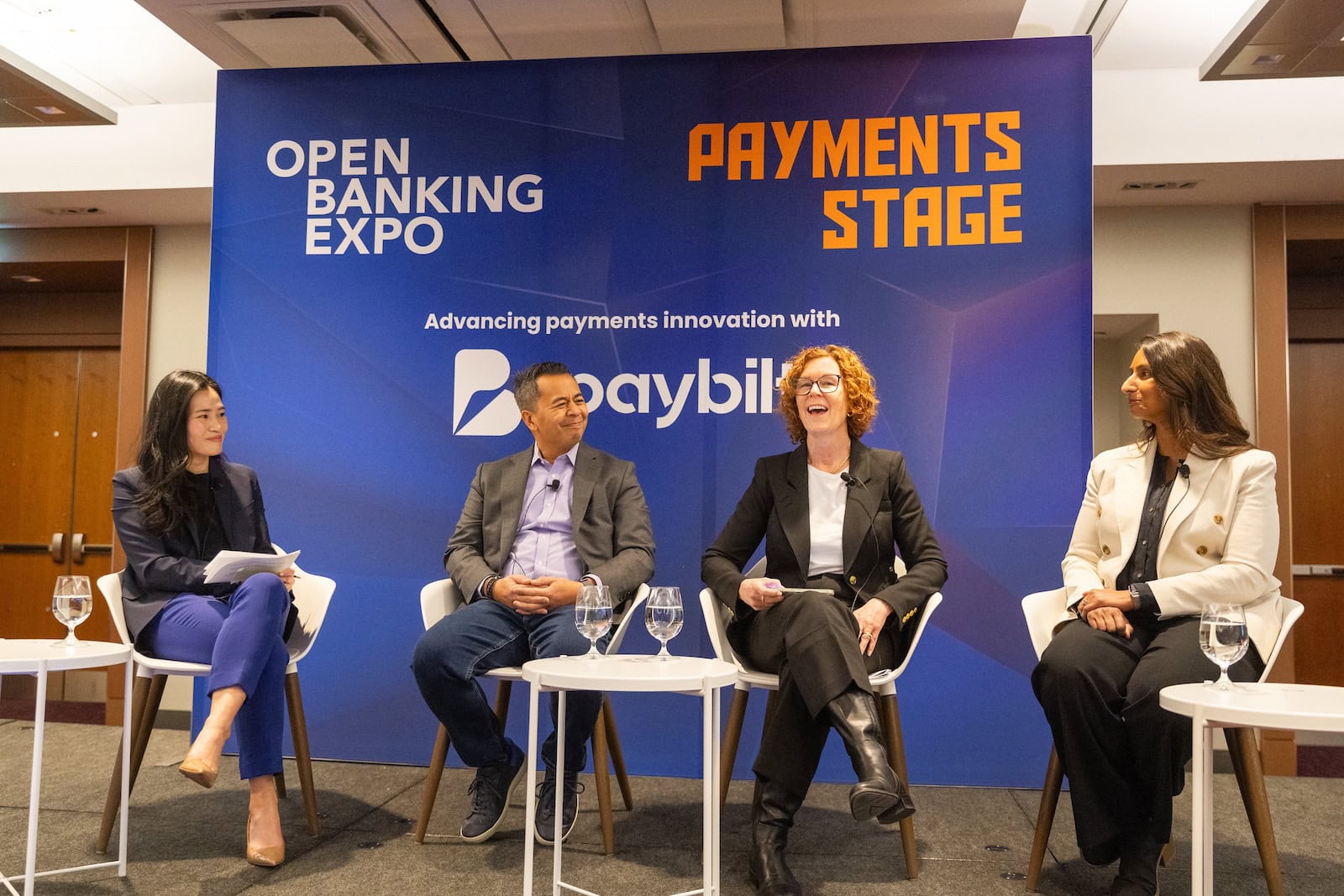
At Open Banking Expo Canada on March 5 in Toronto, leaders from TD Bank, Yodlee and Symcor explored how partnerships, not platforms, will determine whether the ecosystem delivers real value to Canadians.
The discussion, moderated by Joyce Wong, vice president, product, payments and Open Banking at Symcor, opened with a simple observation. Large-scale financial initiatives have never been delivered in isolation, and Open Banking will be no different.
“We’re going to put the lens on partnerships and the value of partnerships,” she told attendees. “Not only in bringing Open Banking ecosystems into life, but how do you scale that effectively and efficiently and safely within the guardrails that we’re going to be putting in place?”
There are reasons for optimism. Brian Buan, head of go to market at Yodlee, pointed to strong existing demand, noting that millions of Canadians are already aggregating their financial data to improve their financial lives. Combined with recent legislative progress and the establishment of a regulatory framework, this creates favourable conditions for adoption.
However, momentum remains fragile. Buan cautioned: “I do truly believe that perfection can be the enemy of progress. So, we have a narrow window to try and keep this momentum, retain it, and create these experiences that Canadians will truly value and embrace.”
This balance between speed and certainty was echoed across the panel.
Maureen Di Sebastiano, vice president, Open Banking at TD Bank Group, said: “There’s some advantage to being first mover, but sometimes when you’re not the first mover, you get a chance to learn from what others have done and what works and what doesn’t work.
“So, it’s encouraging to hear that we are preparing ourselves to take what works in other jurisdictions, but also to see if we can avoid what was the problem in others that didn’t result in optimal adoption. I’m also encouraged by the cooperation and collaboration that’s happening in the industry.”
At the same time, she emphasised that institutions are not waiting for full regulatory clarity. Drawing on experience in the US, where Open Banking has developed in a more market-driven way, she noted that many of the core principles around data protection, customer experience and security are already embedded within banking operations.
“Just building your API is not enough,” she said, pointing to the operational realities of partnerships.
This operational complexity was a recurring theme. Partnerships in Open Banking extend beyond contracts, requiring ongoing coordination across institutions, intermediaries and technology providers. Without clear frameworks for issues such as incident management and customer communication, even well-designed systems can create friction.
Global experience offers valuable lessons
Buan highlighted that successful markets have focused on establishing bilateral agreements early, rather than waiting for regulation to be finalised. He also pointed to the importance of shared liability models and clear consent management processes in building trust and enabling scale.
At the same time, the panel noted that Canada’s market structure may work to its advantage. With a more concentrated financial sector than jurisdictions such as the US, there is less risk of fragmentation, provided participants remain aligned on standards and objectives.
“I think we should certainly look to celebrate the fact that Canadians trust their financial institutions so much,” said Saba Shariff, senior vice president, chief strategy, product and innovation officer at Symcor.
She emphasised that collaboration is already embedded in the Canadian ecosystem.
Shariff also highlighted the risks of treating Open Banking purely as a compliance exercise. While regulatory requirements are a starting point, focusing solely on compliance risks diverting resources away from innovation and customer value.
She encouraged organisations to leverage existing expertise and infrastructure, rather than attempting to build everything internally.
“That is not something you want to do on your own,” she said. “Pick people you trust and do it with them. And then set yourselves up appropriately, as you would in any partnering, buying decision or building decision.”
Key use cases
Use cases were also a key focus of the discussion. Panellists agreed that personal financial management and financial wellness are likely to act as entry points for adoption, enabling consumers to view and manage their financial lives more effectively.
Access to credit was identified as another major opportunity, particularly through the use of cash flow data to improve underwriting and expand access to lending.
Payments, including emerging models such as variable recurring payments, were also highlighted as areas where Open Banking could deliver tangible benefits.
However, the success of these use cases will depend on execution. Without clear and intuitive customer experiences, adoption may be limited, regardless of the underlying capability.
Looking ahead, the panel stressed that partnership decisions made now will have long-term implications. Organisations must define their strategic priorities, determine where to build versus partner, and ensure alignment on incentives and outcomes.
Incentives, in particular, were identified as critical to sustainability. Without balanced value distribution across the ecosystem, progress may slow as participants become reluctant to engage.
Ultimately, the discussion reinforced that Open Banking is not just a technology programme, but a coordinated industry effort.
Further reading: From access to action: Unlocking payment initiation in Canada

