

As Canada advances Consumer-Driven Banking and real-time payments, digital identity is emerging as a critical foundation for the next phase of financial services.
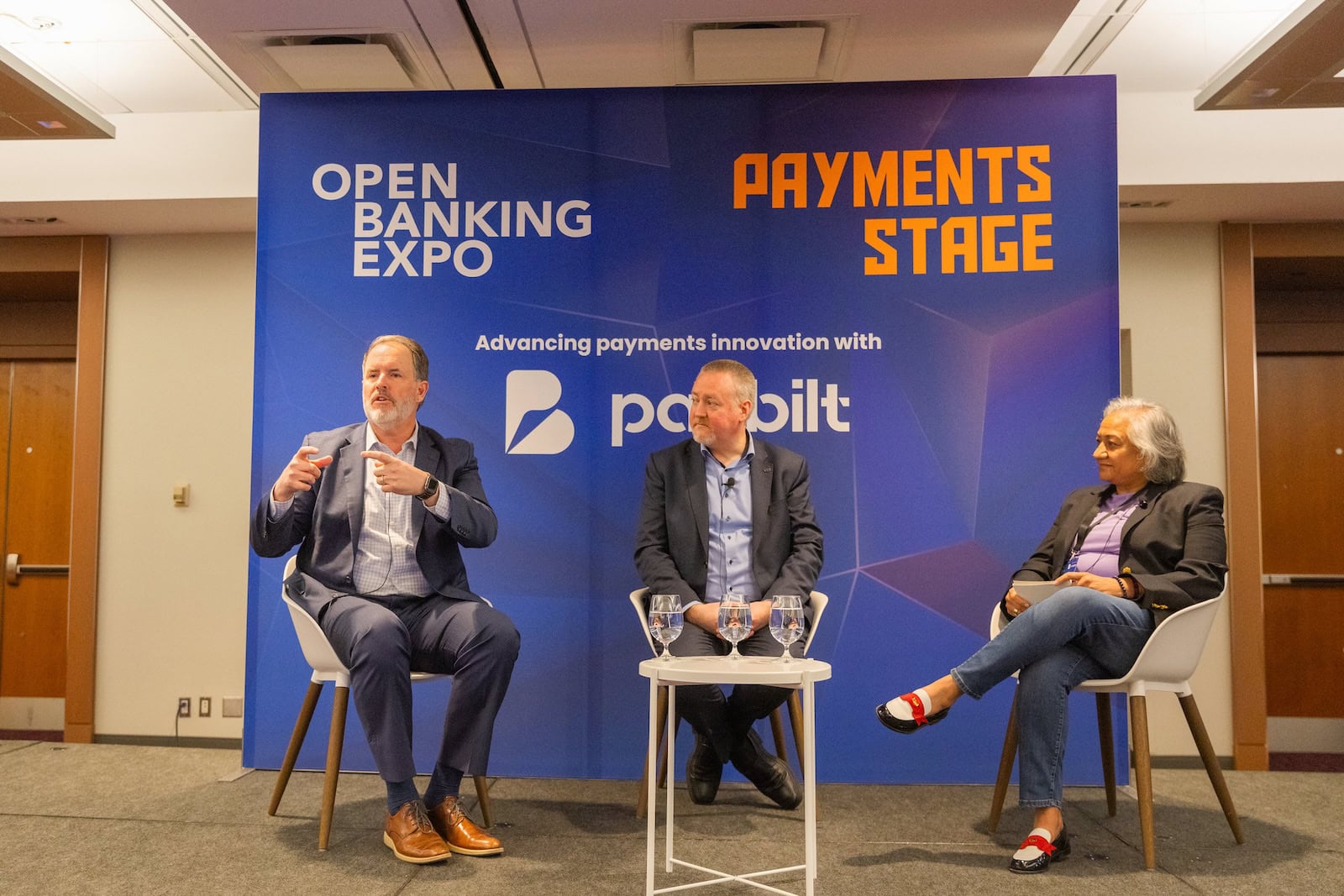
In a Fireside Chat at Open Banking Expo Canada, speakers from Daon and Giesecke+Devrient explored how identity frameworks will underpin secure data sharing, payment initiation and future customer experiences.
Moderator Daksa Mody, senior vice president, central operations at President Choice Bank, opened by saying: “As Consumer-Driven Banking, real-time payments, and that economy is taking shape, digital identity becomes the cornerstone of a secure and seamless interaction in the financial ecosystem.”
Once treated as a static verification step, identity is now becoming a continuous, dynamic process that evolves throughout the customer journey.
This shift is being driven in part by rising fraud risks. Bob Long, president, Americas at Daon, pointed to the growing impact of AI-enabled threats, including deepfakes and sophisticated scams, which are increasing pressure on financial institutions to strengthen identity verification while maintaining a seamless user experience.
At the same time, there is growing recognition that traditional authentication methods, particularly passwords, are no longer fit for purpose. With regulatory changes expected to reduce reliance on practices such as screen scraping, the industry is beginning to move toward more secure and user-friendly alternatives, including biometric authentication and passkeys.
However, balancing security with convenience remains a core challenge. While stronger identity controls are essential, adoption will depend on delivering experiences that consumers are willing to use. As highlighted during the session, even well-designed technology can fail if it introduces too much friction or complexity.
Long said: “A strong identity verification capability has to matter, particularly as we evolve into an Open Banking environment.
“So, think about not only the standards capability, but think about it in terms of the process, the algorithms that are part of the process, the measurements that are associated with the process. There’s a lot that goes into the foundational components of a strong identity verification.”
As data sharing expands, ensuring that identity can be verified consistently across platforms and institutions will be critical. Emerging models, such as portable digital credentials, are expected to play a growing role in enabling this.
“We’ve seen the beginnings of some of the value proposition of Open Banking already,” said Andrew Johnston, business development executive at Giesecke+Devrient. “But once there are clear rules and the government has said, ‘this is how this is going to work’, I think an entire ecosystem is going to crop up. And the breadth and depth, and variety and value that we’ll see in an Open Banking ecosystem is going to be phenomenal.
“We have to, as we’re doing that, make sure that security and privacy are top of mind.”
Looking ahead, speakers suggested that digital identity will extend beyond financial services into a broader ecosystem, supporting interactions across sectors and enabling new forms of data-driven services.
Watch Andrew Johnston of Giesecke+Devrient in the Live Lounge at Open Banking Expo Canada 2026

