

As Canada moves toward legislating write access by 2027, attention is turning to how payment initiation will work in practice.
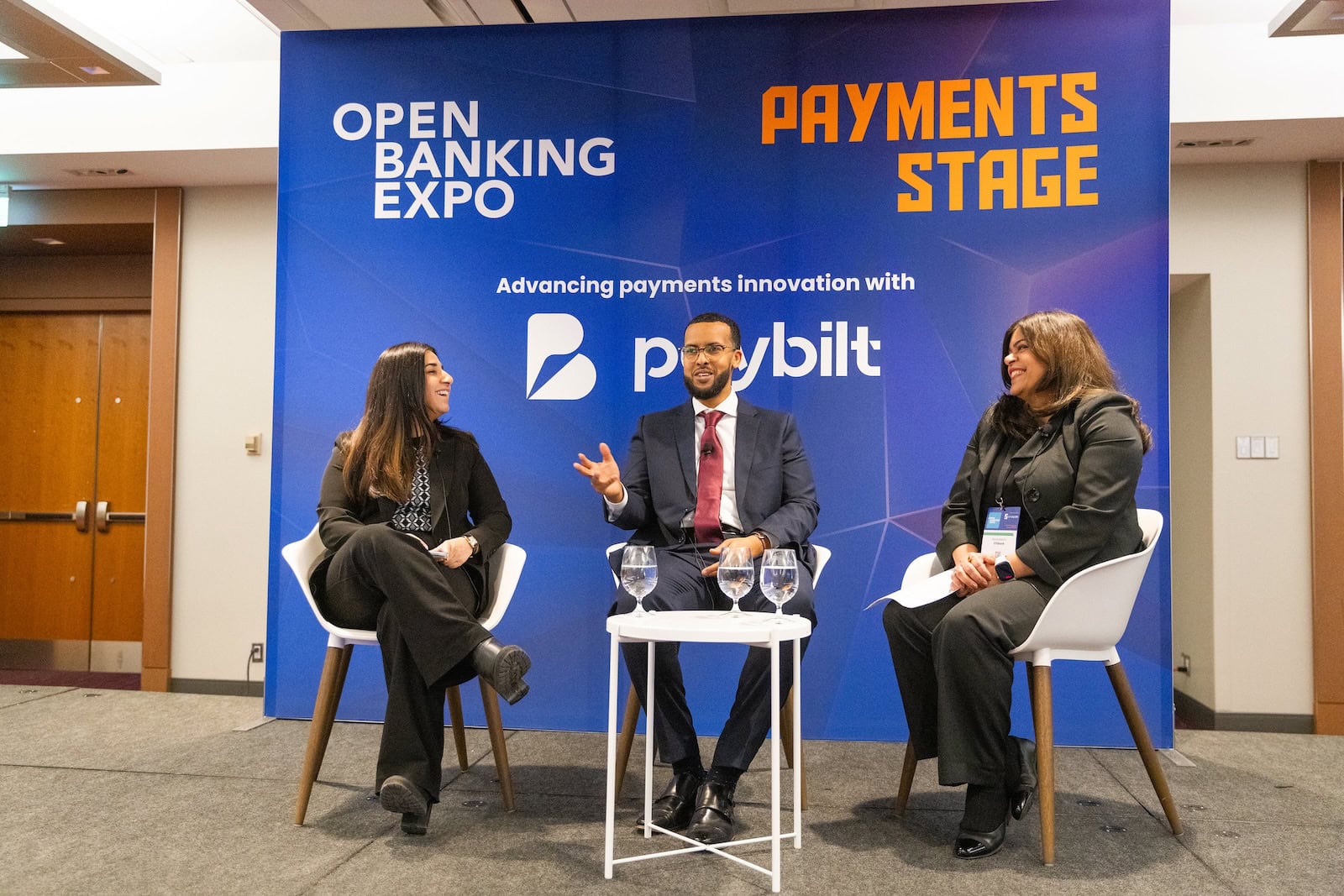
At Open Banking Expo Canada 2026, speakers from Citi, Wealthsimple and Lazer Technologies explored what it will take to move beyond data access and enable real-time, consumer-driven payments at scale.
The discussion, moderated by Megha Sharma, head of fintech at Lazer Technologies, highlighted that while read access is an important first step, the real value of Consumer-Driven Banking will come when data can be paired with action.
Payment initiation, often referred to as Pay by Bank, has the potential to streamline transactions, reduce reliance on cards and create new commercial models across the payments ecosystem.
“Now the government is committed to write access being available by 2027. Obviously, this is a massive shift from just being able to view data to actually be able to write data into different organizations. So, what does that mean for the Canadian ecosystem to be able to do something like that?” asked Sharma.
Abdi Hersi, director, payments strategy and partnership development at Wealthsimple, said: “I really think with this regulatory push, a lot of things are coalescing together. I talked about instant payments, the fact that Real-Time Rail is expected to come online soon, Open Banking comes online.
“We see this in the UK with firms like Revolut and Monzo really using this to develop their products, serve clients in a better way. And I think it’s going to help in terms of level-setting the playing field between the larger FIs and some of the fintechs.”
However, panellists emphasised that significant challenges remain. Establishing consistent standards, building secure infrastructure and defining clear accountability frameworks will be critical to ensuring trust and adoption.
“Standardization is definitely required, but we wouldn’t want to leave it to the hands of banks and fintechs. I feel that there should be a body that is neutral which puts in these standardizations,” said Sonia Bakshi, director, digital head Canada at Citibank.
“But, also, we should commercialize this in the sense that, if banks and fintechs have to build it, there should be some commercial value behind it for them to invest enough to make it work in the best way.”
Speakers also pointed to the importance of real-world use cases. Without clear and compelling benefits for consumers and merchants, adoption may be limited. Faster payments, lower costs and improved user experiences were highlighted as key drivers that could support uptake.
“I think that the government is key in terms of setting guardrails for this,” added Hersi.
“Trust is a key factor, especially when you’re dealing with people’s personal financial information. One thing that we’ve been advocating for is a label that financial institutions can use… so clients can quickly identify, ‘this is a trusted institution, they’ve gone through the full accreditation process. I’m willing to engage in Open Banking use cases through their portals’.”
Ultimately, the session reinforced that payment initiation represents a major opportunity, but one that will depend on execution. Moving from access to action will require not only regulatory progress, but also coordinated industry effort to deliver solutions that are both practical and widely adopted.
Further reading: Rights, access and control in Canada’s Consumer-Driven Banking era